Back in the early ’90s, I used to work and live in Muscat and visit Bombay every year on my annual vacation. The default flight was MCT-BOM.
Then my coworkers who had been around the block for longer than me gave me a ProTip to go via Dubai, saying it was cheaper to fly Muscat to Dubai followed by Dubai to Bombay (and had the added advantage of being able to visit Dubai Duty Free).
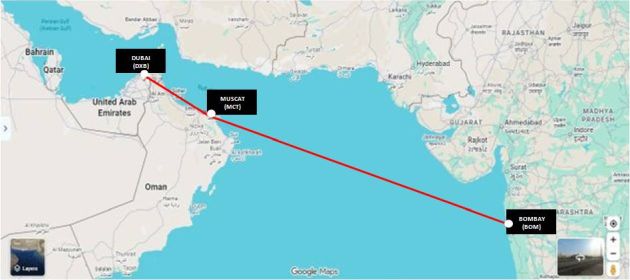
I found this to be an anomaly. As you can see from the below map, MCT-DXB-BOM sector is way longer than MCT-BOM sector.
But the tip was right.
That was my first experience with dynamic pricing i.e. pricing that’s driven by market forces of demand and supply rather than intrinsics like distance and time.
Cue to 30 years ago. A friend of mine found it cheaper to go from Boston to Buffalo (to visit Niagara Falls) by going via New York City on a BOS-JFK-BUF flight.
Cue to 10 years ago. Another friend of mine living in New Jersey wanted to go to Bombay to join the rest of his family and proceed with them to attend a wedding in Baroda (a city in the state of Gujarat in west India). When he searched for flights, he found the EWR-BOM-AMD flight to be cheaper than the EWR-BOM flight. Now, AMD stands for Ahmedabad (also in Gujarat) and, if you go from Bombay to Ahmedabad, Baroda comes in between. So my friend could as well reach Baroda from Ahmedabad as Bombay, so he booked the cheaper ticket and went from Ahmedabad to Baroda (For reasons that will become clear in a bit, he couldn’t skip out at BOM).
Cue to the present day.
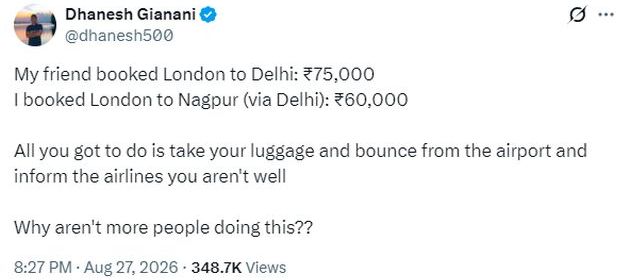
The OP found LHR-DEL-NAG ticket cheaper than LHR-DEL ticket.
To answer the OP’s question, many people reportedly do this. 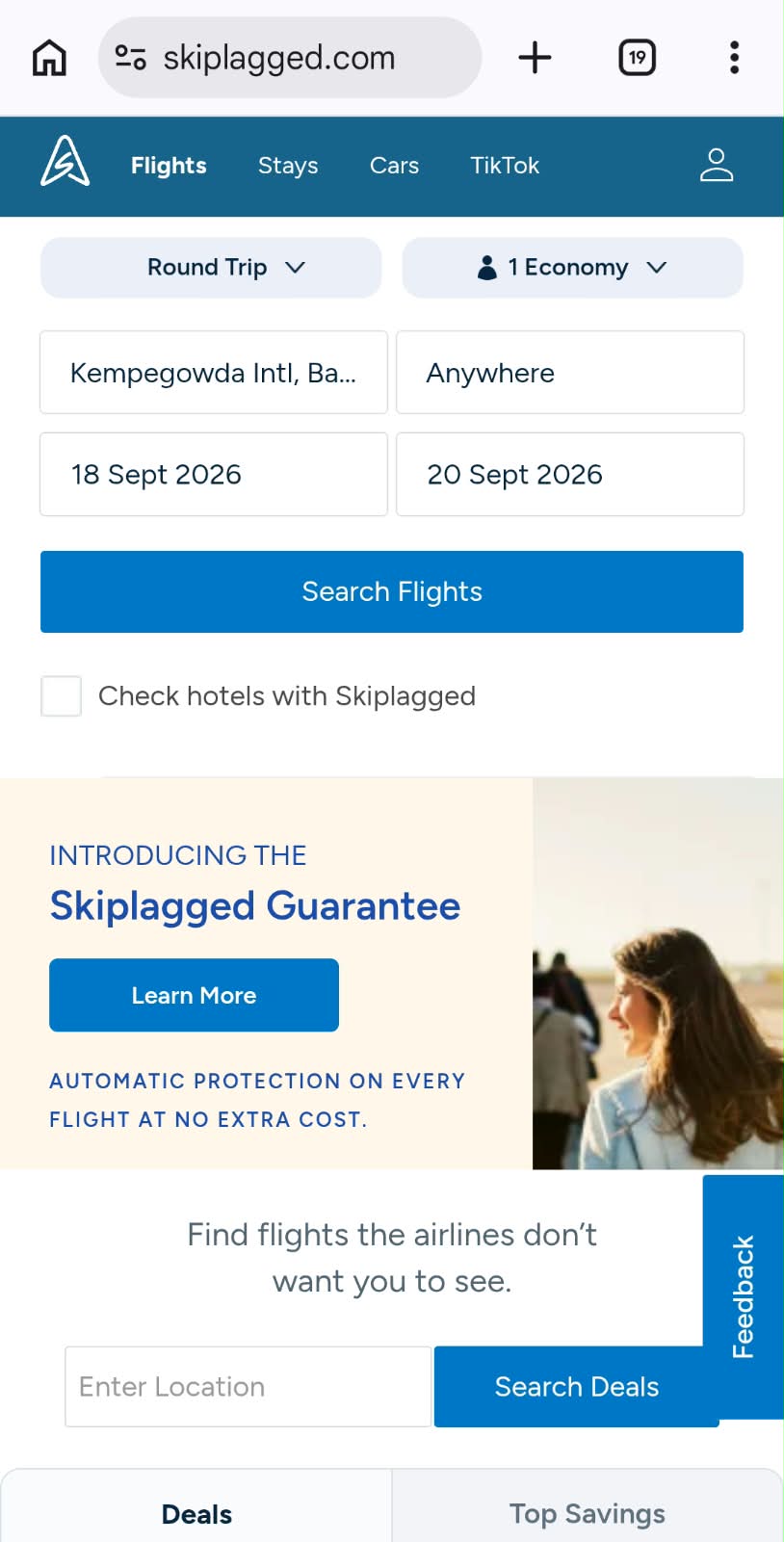
There’s even an OTA (Online Travel Agent) called skiplagged.com that exclusively sells tickets on what it calls skiplagged flights. By finding “flights the airlines don’t want you to see”, it helps passengers going from A —> B to book cheaper tickets for A —> B —> C, and skip at B without proceeding to C.
Obviously, airlines are not going to like this. Skiplagged was sued by United Airways but it won the lawsuit.
But the twitterati warns that airlines might ban passengers who do this on the grounds that, having bought a ticket to C, they must go to C i.e. they cannot skip out at B.
Let’s do a teardown of this warning.
The A —> B —> C air ticket is a contract between the airline and passenger. One view is that the contract bestows a right on the passenger to go to C. The other view is that the contract imposes an obligation on the passenger to go to C.
Passengers might take the former view and skip out at B whereas airlines might take the latter view and ban them for not proceeding to C.
I asked ChatGPT whether an air ticket is a right or obligation.
While you can read its complete answer here, here’s the tl;dr version:
If you buy a plane ticket from A to B to C,
- You have a right to go to B and C, not obligation
- But, to exercise your right to go from B to C, you have an obligation to go from A to B; in other words, an airline can cancel your ticket from B to C if you haven’t encashed your right to go from A to B.
Going by this, as long as the PAX has gone from A to B, s/he has a right not to proceed to C i.e. s/he has the right to skip out at B.
So, a passenger can sue the airline for banning him / her for skipping. (Not legal advice)
One important caveat: When a passenger checks in at A with the A —> B —> C ticket, the airline will check their baggage through to C, so skipping at B is only viable for passengers traveling with hand baggage aka cabin baggage. Since my aforementioned friend had checked-in baggage, he couldn’t skip out at BOM even if he’d wanted to.
It’s only the aviation industry. There are pricing anomalies even elsewhere in the travel industry. Let me give two examples.
Train
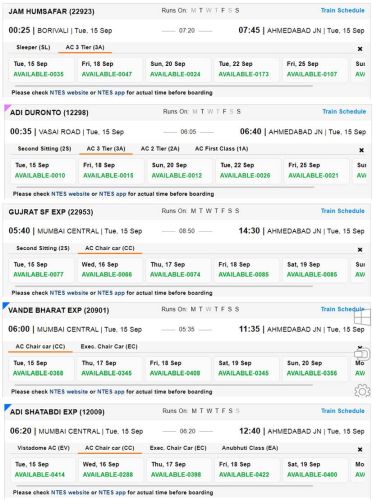 The Shatabdi Express train from Bombay to Ahmedabad goes via Baroda. However, the Bombay to Ahmedabad ticket is both more easily available and cheaper than the ticket from Bombay to Baroda. I’ve heard that people who wish to go from Bombay to Baroda book a ticket to Ahmedabad and get out of the train when it reaches Baroda.
When I was narrating this to a friend who does the Bombay-Ahmedabad beat often, he was skeptical about this hack. According to him, it’s not all that easy to get tickets to Ahmedabad. In his experience, even when he has tried minutes after the booking opens on T-60 days from the date of travel, he has found all trains full and only RAC tickets available. When I heard this, I quickly checked at my side, and found that I could get tickets even for departures after 30 days, let alone 60 days. The only difference between my friend’s and my attempts was that he was trying from Bombay and I was trying from Pune.
I wonder if IRCTC ticket booking website is geo-sensitive!
Hotel
Woz a time when I was working in Germany in an MNC that had offices all over the world. The company had planned a global event in Switzerland. Employees from all over the world were flying into Switzerland. When we searched for hotels at the destination, we found very different prices and availability. My colleague searched from USA and got a confirmed booking for $100. I searched from Frankfurt and got a confirmed booking for $150. However, my colleagues who searched from Basel in Switzerland were told that there’s no room available, at any price!
I was thinking of adding this to my previous post entitled When Middleman Does Not Increase Prices: Five Pricing Paradoxes but travel industry has so many pricing anomalies that I decided to write a separate post to do full justice to it. Consider it done!